


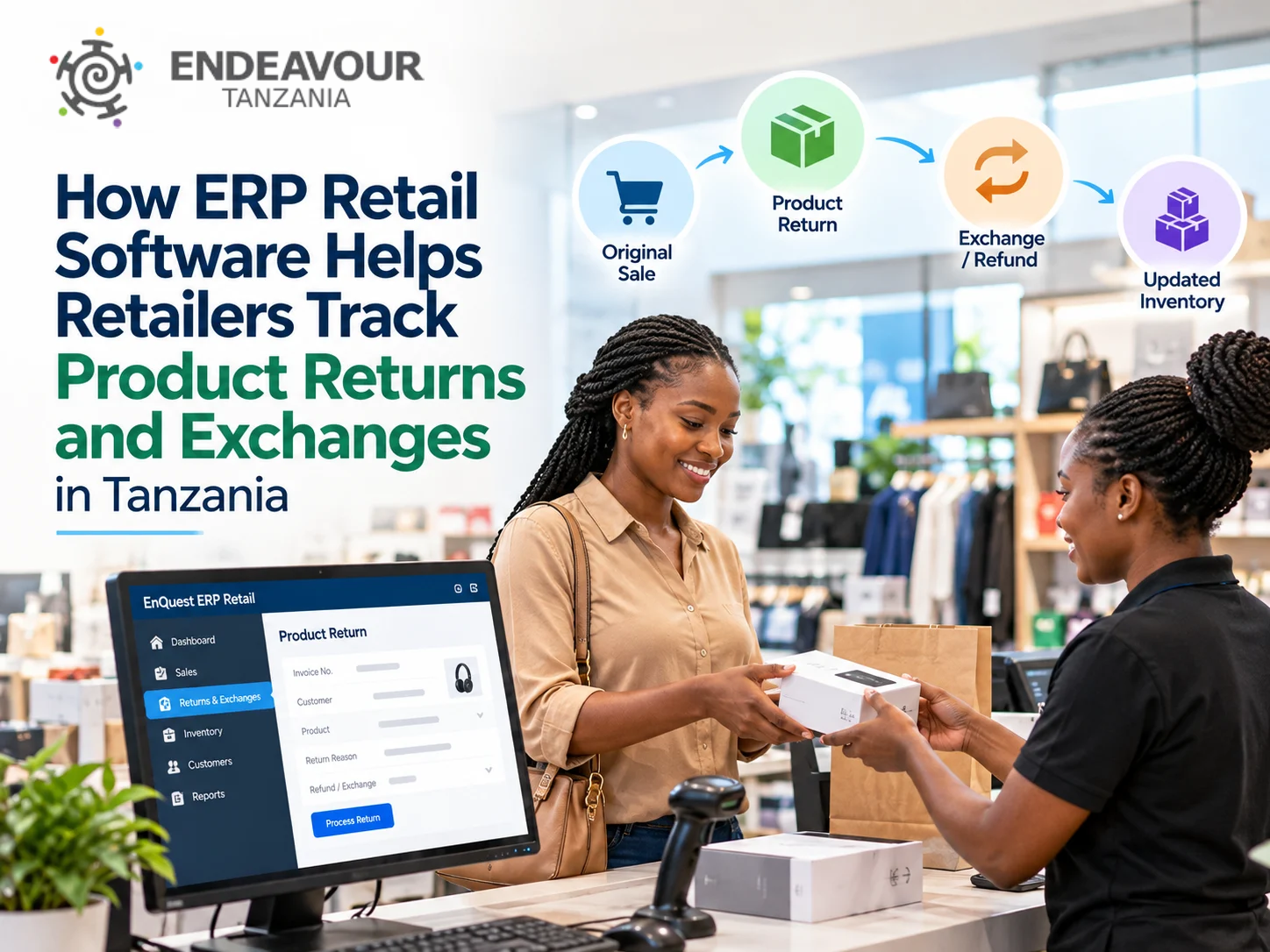
Product returns and exchanges are a normal part of retail. Customers may return an item because it is damaged, the wrong size, the wrong product, or simply not what they expected. For retailers, however, managing these transactions properly can be more complicated than processing a normal sale.
When returns are recorded manually, businesses can lose track of returned products, refund amounts, replacement items and inventory changes. This can create differences between physical stock and system records and make it difficult for management to understand the real performance of the business.
For growing retailers in Tanzania, ERP Retail Software can provide a more structured way to manage returns and exchanges by connecting sales transactions with inventory and customer information. EnQuest ERP Retail can help retailers bring these activities into a more organized retail management process.
Why Product Returns Can Become Difficult to Manage
A normal retail sale generally follows a simple process: the customer purchases a product, payment is received and inventory is reduced.
A return reverses part of that process.
The retailer may need to identify the original transaction, verify the product, decide whether it qualifies for a return, receive the item back, update inventory and process a refund or replacement.
If these steps are handled using paper records or separate spreadsheets, employees may have difficulty finding the original transaction. In some cases, returned products may be added back to stock without the inventory system being updated correctly.
Over time, these small inconsistencies can affect stock accuracy and financial reporting.
Connecting Returns with the Original Sale
One important advantage of using an integrated retail system is being able to connect return activities with sales records.
When a customer brings a product back, the retailer needs to know what was originally sold, when it was sold and what transaction was involved. Having sales information stored within the retail management system makes this process more organized.
With EnQuest ERP Retail, retailers can manage sales and related retail transactions within a centralized system. This provides a better foundation for handling product returns and exchanges instead of relying entirely on manual records.
For businesses processing a large number of daily sales, being able to locate transaction information quickly can save time for both customers and retail staff.
Keeping Inventory Accurate After a Return
A return is not only a customer-service transaction. It also affects inventory.
For example, if a customer returns a product that can be resold, the item may need to be reflected in available stock. If the product is damaged or unsuitable for resale, it may need to be handled differently according to the retailer’s internal process.
Without proper inventory updates, the system may show stock that does not actually exist or fail to show products that have physically returned to the store.
An ERP retail system helps connect the return transaction with inventory management, allowing retailers to maintain a more consistent record of stock movements.
This is particularly important for retailers with a large number of products or multiple branches.
Managing Exchanges More Efficiently
Exchanges can be more complicated than simple returns because one product leaves the customer transaction while another product is provided in its place.
For example, a customer may purchase one product and later exchange it for another model, size, colour or variant.
If the exchange is handled manually, employees may need to make several separate adjustments to sales and inventory records. This increases the possibility of mistakes.
A structured retail ERP system can help staff manage the transaction within the overall sales and inventory process. The original product and replacement product can be accounted for as part of the exchange process, helping maintain better visibility over stock.
Reducing Differences Between Physical and System Stock
Stock discrepancies can become a serious problem for retailers.
A business may physically have 50 units of a product while its system shows 47 because several returns were received but never properly recorded. Alternatively, the system may show more stock than is actually available if returned or damaged products were incorrectly added back into inventory.
These differences can affect purchasing decisions, sales availability and management reports.
By recording returns and exchanges as part of the retail transaction process, businesses can reduce the reliance on separate manual adjustments and maintain a clearer inventory history.
Better Visibility Across Multiple Retail Locations
Returns can become even more difficult when a retailer operates multiple branches.
A product may be purchased from one branch and returned or exchanged through another location, depending on the retailer’s policies and operating model. Managing such transactions manually can make it difficult for management to maintain an accurate view of inventory.
A centralized ERP retail system can give businesses greater visibility into sales and stock activities across their operations.
For growing retailers in Tanzania, this can make it easier to understand where products are being sold, returned, exchanged or transferred and how these activities affect overall inventory.
Helping Retail Staff Handle Customers More Efficiently
Returns and exchanges can directly affect the customer experience.
Customers generally expect the process to be straightforward. If staff members have to search through paper receipts, spreadsheets or different systems before confirming a transaction, the process can become slow.
When sales and customer transaction information is organized in one retail system, employees can access relevant information more efficiently.
This allows staff to focus on resolving the customer’s request instead of spending unnecessary time searching for transaction details.
A faster and more organized process can also help retailers maintain consistent return and exchange procedures across their stores.
Understanding Return Patterns
Returns are also useful business information.
If a retailer regularly receives returns for a particular product, management may want to investigate why. The reason could be product quality, incorrect product descriptions, packaging problems, customer expectations or other operational issues.
A retail ERP system can provide transaction records and reporting information that helps management review business activity.
Instead of looking at returns as simply a cost or administrative task, retailers can use return information as part of their broader operational analysis.
This can help businesses identify recurring issues and make better purchasing, product and inventory decisions.
How EnQuest ERP Retail Supports Better Retail Control
For Tanzanian retailers, EnQuest ERP Retail can provide a connected environment for managing important retail activities including sales, inventory and purchasing.
When returns and exchanges are handled within a structured retail management process, businesses can maintain better coordination between customer transactions and stock records.
This becomes especially valuable for retailers managing a large product catalogue, multiple branches or high daily transaction volumes.
The goal is not simply to process returns faster. It is to make sure that every return or exchange is properly reflected in the wider retail operation.
Why Return Management Matters as Retail Businesses Grow
A small retailer may be able to manage occasional returns manually. As sales volume increases, however, the number of returns and exchanges can also increase.
More transactions mean more opportunities for missing records, incorrect inventory adjustments and difficulties in tracing previous sales.
This is where ERP Retail Software in Tanzania can become an important part of retail operations.
By connecting sales, inventory and related transactions, retailers can create a more organized process for handling both normal sales and situations where products need to be returned or exchanged.
For growing businesses, better return management contributes to better inventory control, clearer records and a more consistent customer experience.
How EndeavourTanzania Can Help Retailers
For retailers in Tanzania looking to improve control over their daily operations, EndeavourTanzania provides business software solutions including EnQuest ERP Retail.
EnQuest ERP Retail can help retailers manage core activities such as sales, inventory and purchasing within a connected retail environment. By bringing these processes together, businesses can build a more structured approach to managing transactions, stock movements and day-to-day retail operations.
For retailers experiencing increasing transaction volumes, multiple locations or growing inventory complexity, a structured retail ERP system can provide a stronger foundation for managing the business.
Conclusion
Product returns and exchanges may represent only a small part of daily retail activity, but poor return management can create larger problems for inventory accuracy, transaction records and customer service.
ERP Retail Software in Tanzania helps retailers move away from disconnected manual processes by connecting retail transactions with inventory and other operational information.
With EnQuest ERP Retail, retailers can create a more organized approach to managing sales, stock and related transactions. This can help businesses maintain better inventory visibility, reduce administrative work and gain greater control as their retail operations grow.
Frequently Asked Questions
Why are product returns difficult for retailers to manage?
Returns can affect sales records, inventory, refunds and customer information. Managing these activities manually can increase the risk of missing or inconsistent records.
How can ERP Retail Software help with returns?
An ERP retail system can connect return-related transactions with sales and inventory records, helping businesses maintain more consistent information.
Can ERP software help manage product exchanges?
Yes. A structured retail system can help businesses account for the returned product and replacement product within the overall retail transaction process.
Why is return tracking important for inventory management?
Returns change the physical quantity of products available. Recording them properly helps keep system inventory closer to actual stock levels.
How does EnQuest ERP Retail help Tanzanian retailers?
EnQuest ERP Retail provides a connected environment for managing retail activities such as sales, inventory and purchasing, helping businesses improve operational visibility and control.
