


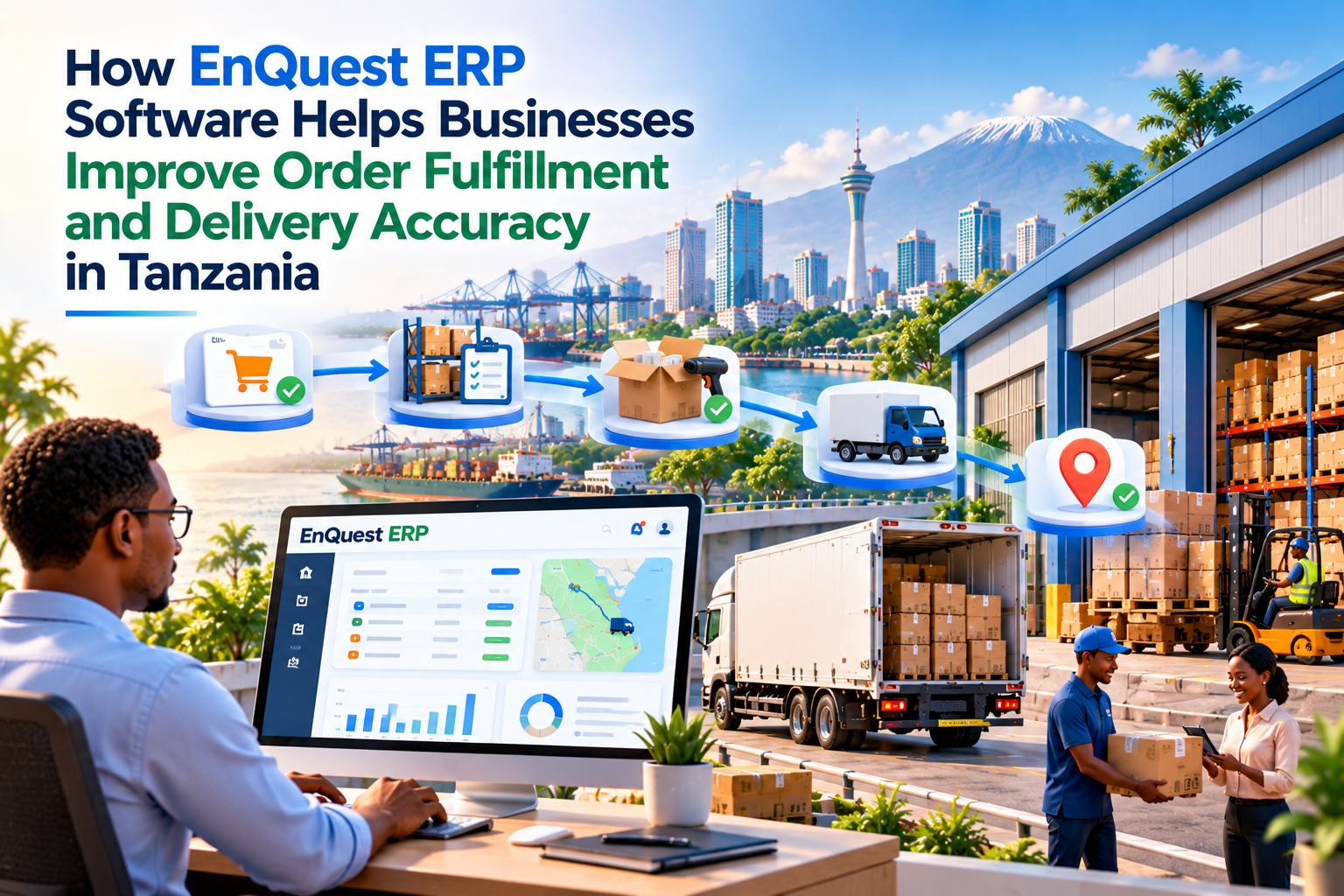
Businesses in Tanzania that manage frequent customer orders, multiple warehouses, and daily deliveries need an organised way to coordinate their operations. When sales orders, stock records, picking lists, and delivery information are managed separately, mistakes can happen. Customers may receive the wrong products, orders may be delayed, or sales teams may promise items that are not available in stock.
These challenges can affect customer satisfaction, increase operating costs, and reduce business efficiency. EnQuest ERP software in Tanzania can help businesses connect order processing, inventory management, purchasing, warehouse operations, and sales information within an integrated business management system.
For wholesalers, distributors, retailers, and manufacturers, better coordination between these activities can make it easier to process orders accurately and prepare deliveries on time.
What Is Order Fulfillment and Why Does Accuracy Matter?
Order fulfilment is the process of managing a customer order from the moment it is received until the products are prepared, dispatched, and delivered. It includes checking product availability, confirming quantities, picking items from the warehouse, preparing dispatch documents, and coordinating delivery.
Delivery accuracy means ensuring that the correct products, quantities, and order details reach the intended customer.
For example, a wholesale distributor in Dar es Salaam may receive dozens of orders from retailers every day. If the sales team, warehouse staff, and delivery team work with different records, an order for 20 cartons could be picked as 12 cartons or mixed with another customer’s shipment.
Even a small mistake can lead to additional transport costs, returns, customer complaints, and time spent correcting records. A connected ERP system helps businesses maintain better visibility of order information throughout the fulfilment process.
Common Order Fulfillment Challenges Faced by Businesses in Tanzania
1. Inaccurate Inventory Information
When stock records are updated manually or too infrequently, sales teams may not know the actual quantity available. This can result in orders being accepted for unavailable products or warehouse teams discovering shortages after an order has been confirmed.
An ERP system can help connect sales and inventory records so employees can check available stock before processing orders. This supports better order planning and reduces avoidable fulfilment delays.
2. Manual Order Entry Errors
Entering the same order information into spreadsheets, invoices, warehouse records, and delivery documents increases the risk of mistakes. Product codes, quantities, prices, and customer details may be entered incorrectly or inconsistently.
Using a centralised system can reduce repeated data entry and help employees work from consistent order information.
3. Poor Coordination Between Departments
Sales teams may confirm an order without informing the warehouse, while dispatch teams may not receive updated delivery instructions. These communication gaps can slow down the entire process.
When departments use connected business records, they can coordinate order preparation and dispatch more effectively.
4. Delays in Picking and Dispatching Orders
Warehouse staff need clear information about which products to pick, how many units are required, and which customer the order belongs to. Unclear paperwork and poorly coordinated stock records can cause delays.
Organised order and inventory information helps warehouse employees prepare the correct items and supports a more structured dispatch process.
5. Limited Visibility Into Order Status
Customers and sales representatives may need updates about whether an order is confirmed, being prepared, or ready for dispatch. When this information is scattered across different records, responding to enquiries can take longer.
A centralised ERP system can make order information easier to access, depending on the system configuration and user permissions.
How EnQuest ERP Software Helps Improve Order Fulfillment
1. Centralising Customer Order Information
EnQuest ERP helps businesses manage sales and order information within an integrated business management environment. Instead of depending on separate spreadsheets and disconnected records, employees can work with organised customer and transaction information.
For example, when a distributor receives an order from a retailer, the sales team can record the required products, quantities, and customer details. This creates a more consistent reference for the next stages of order processing.
Centralised order information also helps reduce confusion when customers place repeat orders or when multiple employees handle different parts of the same transaction.
2. Improving Stock Availability Checks
Accurate inventory information is essential for reliable order fulfilment. Before confirming a customer order, businesses need to understand whether the required products are available and whether stock needs to be replenished.
EnQuest ERP’s inventory management capabilities can help businesses monitor stock information alongside sales and purchasing activities. This makes it easier to identify potential shortages and plan replenishment before they disrupt customer orders.
For importers and wholesalers in Tanzania, this can be particularly useful when products have long supplier lead times or arrive in large shipments.
3. Reducing Errors During Order Preparation
Once an order is confirmed, warehouse employees need to prepare the correct products and quantities. Errors can occur when staff rely on handwritten instructions, outdated documents, or verbal communication.
With organised order records, employees can refer to the recorded product and quantity details during preparation. Businesses can also establish standard checking procedures to verify picked items against the original order before dispatch.
Combining reliable ERP records with a clear warehouse checking process can help reduce incorrect shipments and unnecessary returns.
4. Connecting Sales, Inventory, and Purchasing
Order fulfilment depends on more than the sales department. If inventory is insufficient, purchasing may need to arrange replenishment. If stock is available at another warehouse, staff may need to consider how to fulfil the order using the available stock.
An integrated ERP environment helps businesses coordinate sales, inventory, and purchasing information. This supports better decisions about product availability, replenishment requirements, and order commitments.
For growing companies operating across several locations, connected information can also improve visibility into stock movements and business activity across the organisation, subject to the configured features.
5. Supporting Better Dispatch Planning
Preparing a correct order is only one part of fulfilment. The order must also be documented and handed over for delivery with the right customer and shipment information.
EnQuest ERP can support the management of sales transactions and related business records, helping teams organise information needed for dispatch. Businesses can establish a standard workflow in which staff verify the customer, products, quantities, and relevant documents before goods leave the warehouse.
For delivery accuracy, companies should also maintain clear procedures for recording dispatch confirmation, delivery status, and any differences reported by the customer.
6. Improving Management Visibility Through Reports
Managers need to understand where fulfilment problems occur. Are orders delayed because stock is unavailable? Are particular products frequently returned? Are some warehouses experiencing repeated picking errors?
ERP reports can help businesses review available sales, stock, and transaction information to identify patterns that require attention. The reports and metrics available will depend on the software configuration.
By regularly reviewing fulfilment issues, managers can identify recurring problems and improve their processes rather than relying only on complaints or end-of-month summaries.
Example: Improving Order Fulfillment for a Tanzanian Wholesale Distributor
Consider a wholesale business supplying packaged goods to shops across Dar es Salaam and nearby areas. The business receives orders from multiple customers, stores products in a warehouse, and dispatches goods every day.
Without a connected process, the sales team might confirm products that are out of stock. Warehouse employees could pick the wrong quantities, while dispatch staff might receive incomplete customer details. Correcting these issues takes extra time and can delay other deliveries.
With EnQuest ERP supporting sales, inventory, and purchasing workflows, the business can maintain more consistent order and stock records. Employees can use the available information to check stock, prepare orders, coordinate replenishment, and review sales transactions.
The distributor can further improve accuracy by introducing a final order verification checklist before dispatch and recording delivery discrepancies for follow-up.
The result depends on how the software is configured and how consistently employees follow the process. Technology works best when it supports clear operational procedures.
Key Practices for More Accurate Deliveries
ERP software provides a stronger foundation for order management, but businesses should also establish consistent fulfilment procedures.
Use standard product codes and descriptions so employees can distinguish similar items. Keep inventory records updated whenever stock is received, transferred, or issued. Confirm customer details and quantities before processing orders. Introduce a final picking and dispatch check to catch errors before goods leave the warehouse.
Businesses should also record returns, shortages, damaged products, and delivery discrepancies. Reviewing these records regularly can reveal recurring issues and help managers decide where additional training or process improvements are needed.
Why Choose EnQuest ERP for Order and Inventory Management in Tanzania?
Businesses need a practical way to coordinate daily transactions while maintaining visibility across sales, stock, purchasing, and warehouse activities. EnQuest ERP offers an integrated approach to managing these business processes.
For wholesalers, distributors, retailers, and manufacturers, it can help organise customer orders, improve inventory visibility, coordinate purchasing activities, and make business information easier to review. Its suitability for a particular business depends on its operational requirements and the features included in the proposed configuration.
Endeavour Tanzania can help businesses explore how EnQuest ERP may fit their order management and inventory workflows.
If your business is experiencing frequent order errors, stock discrepancies, or delays in preparing deliveries, reviewing your current process is a useful first step. A well-configured ERP system, supported by consistent operating procedures, can help create a more reliable fulfilment process.
Conclusion
Accurate order fulfilment is essential for maintaining customer trust and managing business costs. For Tanzanian businesses handling regular orders and deliveries, disconnected records and manual processes can make it difficult to maintain consistent information from sales confirmation to dispatch.
EnQuest ERP helps bring sales, inventory, purchasing, and related business information together, giving teams a more organised foundation for managing orders. When combined with accurate stock records, standard warehouse procedures, and proper dispatch checks, it can support fewer avoidable errors and more dependable delivery operations.
For businesses looking to improve order processing and inventory control, EnQuest ERP is worth evaluating against their specific operational needs.
Frequently Asked Questions
1. How does ERP software improve order fulfilment?
ERP software connects important business information, including sales orders, inventory, purchasing, and transaction records. This can help employees check stock, coordinate order preparation, and reduce errors caused by disconnected records.
2. Can EnQuest ERP help reduce delivery errors in Tanzania?
EnQuest ERP can support more consistent order and inventory information. Businesses can combine these capabilities with product-picking checks, dispatch verification, and delivery discrepancy records to help reduce mistakes.
3. Which businesses can benefit from ERP-based order management?
Wholesalers, distributors, retailers, importers, exporters, and manufacturers that process regular customer orders or manage significant inventory may benefit from integrated order and stock management.
4. How does inventory accuracy affect delivery performance?
Accurate stock records help businesses confirm product availability, identify shortages, and prepare orders using reliable information. Inaccurate records can lead to delays, partial orders, and unnecessary returns.
5. How can businesses in Tanzania get started with EnQuest ERP?
Businesses should first review their existing order, inventory, warehouse, and dispatch processes. They can then discuss their requirements with Endeavour Tanzania to determine whether EnQuest ERP’s available features and configuration are suitable.
